
Frequently Asked Questions
Is hyperbaric oxygen therapy safe, and what does a session feel like?
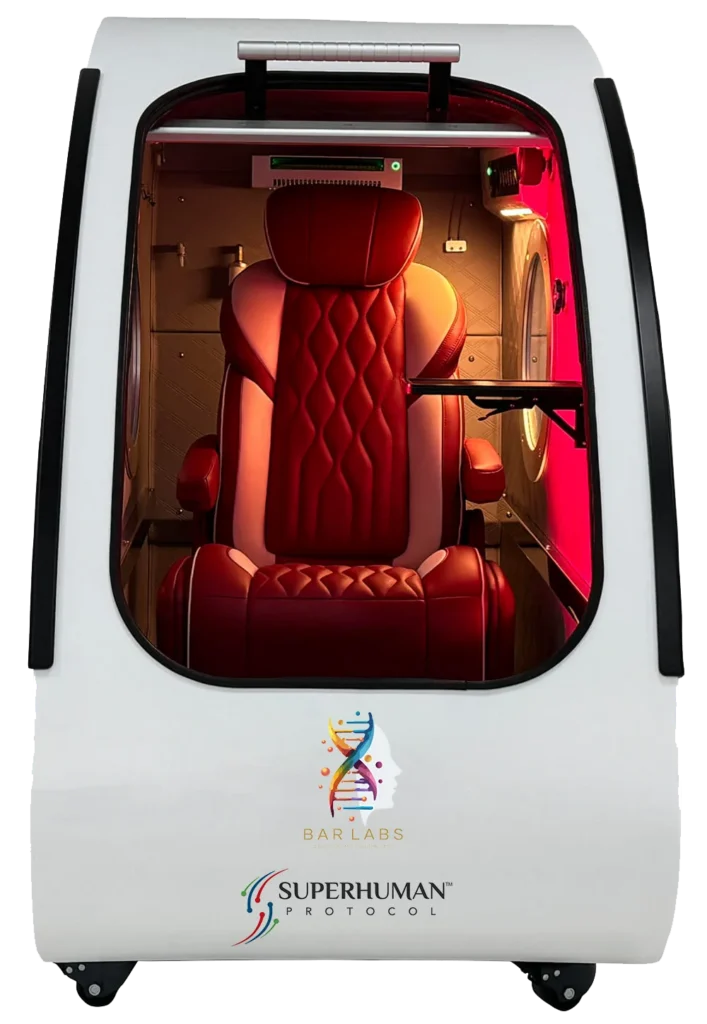
HBOT has a well established safety record when properly supervised. Most people feel only ear pressure during compression, similar to a plane descending, and then relax or nap for the session. It is not appropriate for everyone. Untreated collapsed lung, certain medications, and some ear and sinus conditions are contraindications. Every BAR Labs patient is screened by a physician before a first session.
How many HBOT sessions before I notice a difference?
Many patients report improved sleep, energy or recovery within the first several sessions. Cellular effects such as the telomere changes seen in published research were measured across multi-month protocols of repeated sessions, not single visits. HBOT works cumulatively, which is why it is built into a membership cadence rather than sold as a one-off.